


Striscione blu con i loghi di Unione Europea, Ministero Università e Ricerca, PNRR, UniCassino, Sapienza e testo correlato.

What remains of the church today

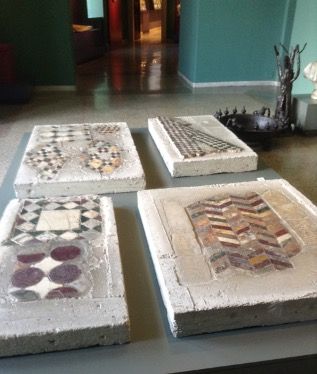
Although the basilica commissioned by Desiderius has been destroyed, some traces of its splendour are still visible. In particular, excavations after the Second World War brought to light the remains of the floor.

Resti del pavimento originario della basilica desideriana esposti al Museo dell’abbazia di Montecassino.

Museo dell’abbazia di Montecassino, resti del pavimento originario della basilica desideriana

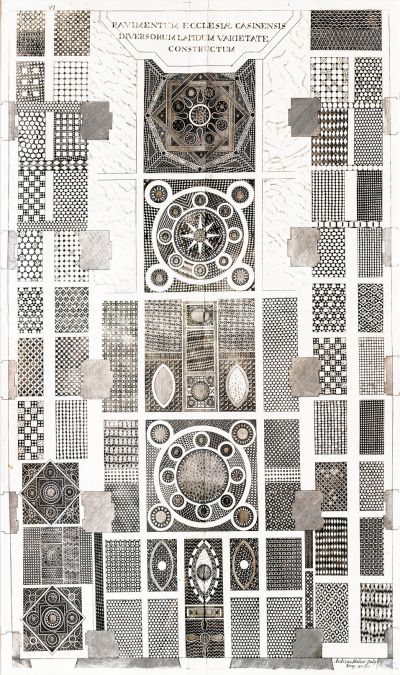
The floor was reproduced by Erasmo Gattola in an engraving from 1733. Gattola describes it in detail: we know that it was made of polychrome marble arranged in complex geometric designs. In addition to its aesthetic value, the floor had a practical function: it helped the monks to position themselves correctly during liturgical celebrations and to identify the points where objects such as candlesticks should be placed.

Riproduzione settecentesca del pavimento della chiesa abbaziale di Desiderio, con complessi motivi geometrici e cosmateschi tratti dall’opera di Erasmo Gattola del 1733.

Riproduzione del pavimento della chiesa abbaziale di Desiderio (da E. Gattola, Historia abbatiae Cassinensis, Venezia 1733, I)


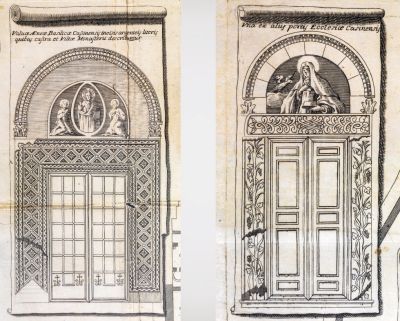
Thanks to Gattola’s engravings, it has also been possible to identify the church’s portals.


Riproduzione dei portali della chiesa abbaziale di Desiderio, con due ingressi decorati da archi, motivi ornamentali e figure sacre, tratta dall’opera di Erasmo Gattola del 1733.

Riproduzione dei portali della chiesa abbaziale di Desiderio (da E. Gattola, Historia abbatiae Cassinensis, Venezia 1733, I)


Today, we can admire the doorposts, carved with refined geometric and naturalistic decorations, originally enriched with mosaic tiles. These sculptures reveal a strong link with the classical Roman tradition and are preserved, together with the remains of the floor, in the abbey museum.
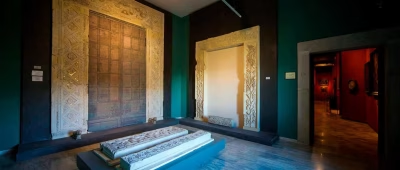
Resti dei portali di ingresso alla chiesa abbaziale di Desiderio esposti al Museo dell’abbazia di Montecassino.

Museo dell’abbazia di Montecassino, resti dei portali di ingresso alla chiesa abbaziale di Desiderio


Finally, one of the best-preserved elements is the bronze door that gave access to the church. Desiderius had it donated by the influential Amalfi merchant Mauro. The bronze door, composed of panels made in Byzantium and assembled in Montecassino, has been remodelled over time, but overall the bronze plates are still the original ones.

Even so, the pre-eminent surviving testimony to the splendour of the basilica is the library collection, created specifically for the consecration of the church and for religious celebrations. Many manuscripts have been preserved in perfect condition and constitute the highest expression of Desiderius’ cultural heritage.