Striscione blu con i loghi di Unione Europea, Ministero Università e Ricerca, PNRR, UniCassino, Sapienza e testo correlato.

The art of miniature at Montecassino

Starting in the 8th century, the illuminators of Montecassino developed a unique art form.

Manuscripts were enriched with decorated letters and illustrations. These served to facilitate reading by highlighting the most important parts of the texts and translating the content into images. The decoration embellished sacred and liturgical texts intended for community prayer. Examples include Bibles and Exultet rolls. Sacramentaries and Missals, used for the celebration of the Divine Office, were also decorated. Other texts include Homilies, which collect sermons, while Legendaries and Passionaries narrate the lives and martyrdoms of saints.


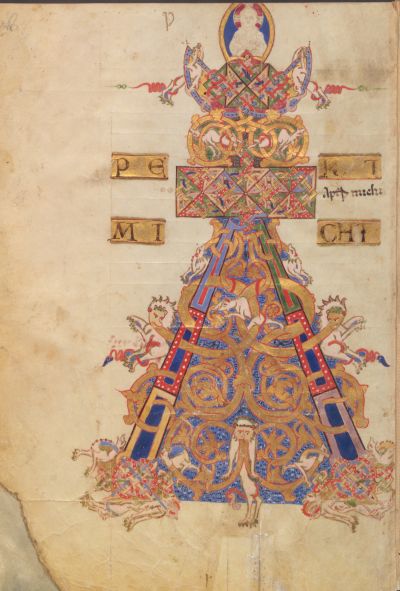
Pagina miniata del Cod. 98 con una grande iniziale decorata, caratterizzata da intricate volute dorate, figure zoomorfe e motivi intrecciati su fondo blu, sormontata da un medaglione con figura benedicente.

Cod. 98, p. 8

The monastery also illustrated legal codes, chronicles and registers, which pass on the history of the abbey or collect documents attesting to its possessions and economic privileges. These manuscripts are often enriched with portraits of benefactors and scenes of donation or approval of relevant documents.

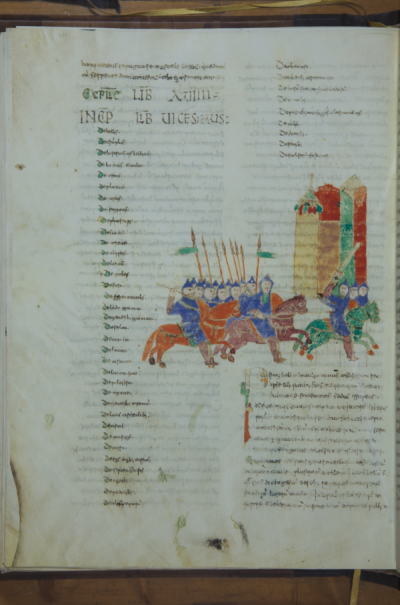
Miniatura medievale con una scena di cavalieri armati a cavallo, disposti in gruppo con lance alzate, davanti a edifici merlati; il testo latino è disposto intorno alla scena.

Regesti 4, p. 57

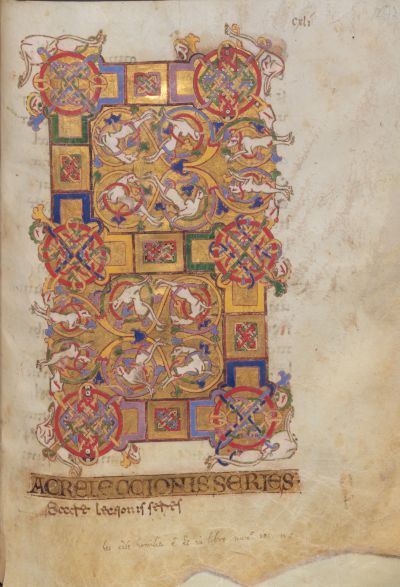
Pagina miniata con grande decorazione geometrica e zoomorfa su fondo dorato, composta da intrecci e figure di animali fantastici entro tondi e riquadri policromi.

Cod. 97, p. 493

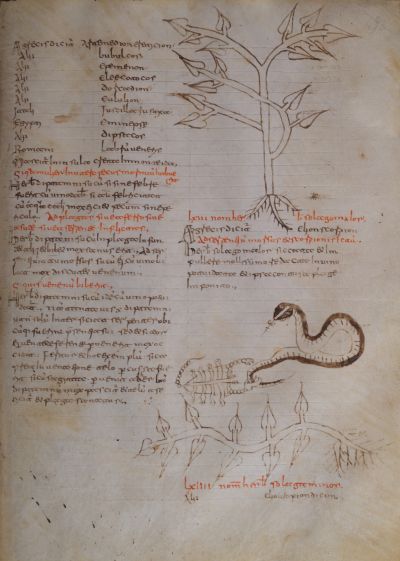
Also important for education are texts on grammar, dialectics, rhetoric and the arts of the Quadrivium (arithmetic and geometry, astronomy and music), together with treatises on medicine, complete with diagrams, images of medicinal plants and illustrations showing the use of surgical instruments.

Between 1022 and 1032, the work ‘De Universo’ by the Carolingian monk Rabanus Maurus was also illustrated at Montecassino, with more than three hundred miniatures.  It is an extraordinary example of a medieval encyclopaedia containing all the knowledge of the time.

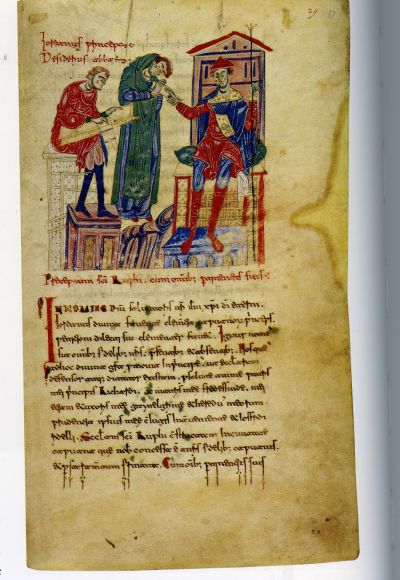
Pagina miniata del Codice 132 con una scena di donazione: un dignitario seduto su un trono riceve un documento da due personaggi in piedi, mentre un terzo tiene una pergamena; sotto, testo manoscritto in latino.

Cod. 132, p. 476

Pagina del Codice 98 con testo manoscritto e tre disegni a inchiostro: in alto una pianta stilizzata con radici e rami; a destra un serpente che attacca un animale dal corpo segmentato; in basso una serie di germogli tracciati linearmente.

Cod. 98, p. 277

The Cassinese illuminators were specialists in decorated letters. These indicate the beginning of the works copied in the manuscripts, called ‘incipit’or particular sections of the texts, such as prologues or chapters. Decorated letters not only serve as embellishment, but also help the reader to navigate the text. They vary in size and take on highly imaginative forms. Especially during the era of Abbot Desiderius, they are extremely refined: they are enriched with intertwining patterns, human figures, animals, geometric motifs and plant motifs such as leaves and branches.

The scriptorium of Montecassino continued its activity until the 12th century, keeping its decorative traditions alive. It produced manuscripts that to this day continue to bear witness to the richness and complexity of medieval monastic culture.