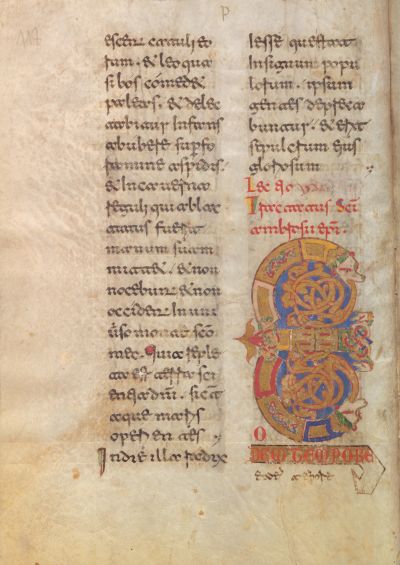
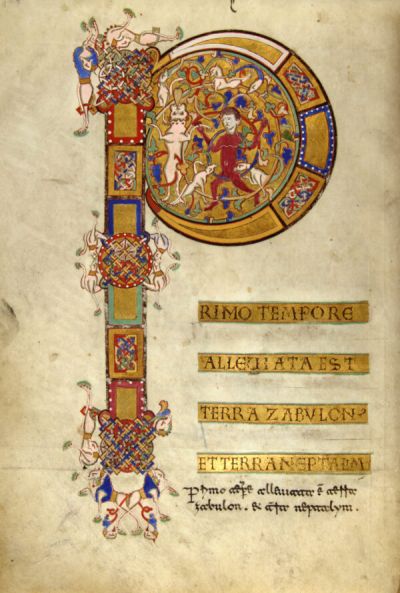
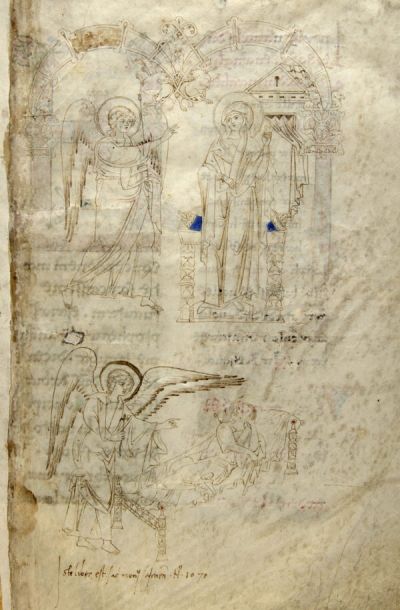
During Desiderius’s rule, the Abbey of Montecassino experienced a period of intense artistic fervour. To decorate the new basilica, Desiderius sought out artists and works of art from both the West and the East, encouraging illuminators to renew the Cassinese decorative style, which had a long tradition. They rediscovered masterpieces of book art that had been kept in the monastery for decades, such as the Ott.lat.74, donated to Abbot Theobald in 1022. The book features splendid letters decorated with gilded plant motifs, typical of Ottonian miniatures.
The Desiderian illuminators drew inspiration for their figurative style from Byzantine art. The latter was known thanks to the mosaicists, icons and goldsmiths that Desiderius brought to Montecassino.
The year 1066, when reconstruction work began on the abbey church, also marked a turning point for the scriptorium. Several precious codices were produced, such as Cod. 339, written, like the others, in Beneventan script. Beneventan was the national script of southern Italy in the Middle Ages, which during this period took on particular characteristics typical of Monte Cassino.
The most splendid period was between 1071 and 1080. Manuscripts were produced that were associated, in terms of use and function, with the new spaces and furnishings that Desiderius had created for liturgical celebrations.