


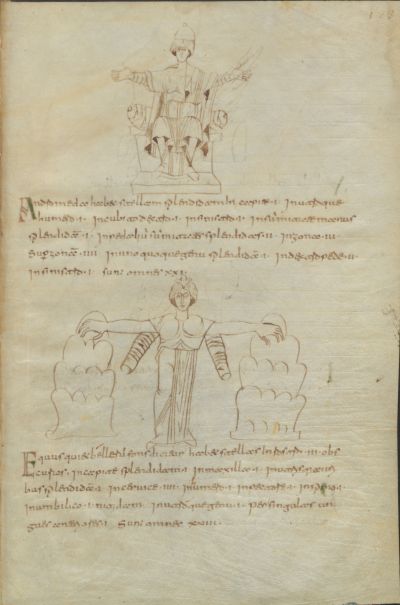
Proof of this can be found in a beautiful manuscript created during the time of Abbot Bertario (850-883): Cod. 3. The book contains a description of the heavens in Latin, derived from that of the famous Greek astronomer Aratus of Soli and illustrated with drawings of the constellations and signs of the zodiac. In these, the classical world had identified pagan heroes and gods: Hercules, Cassiopeia, Perseus, Andromeda.
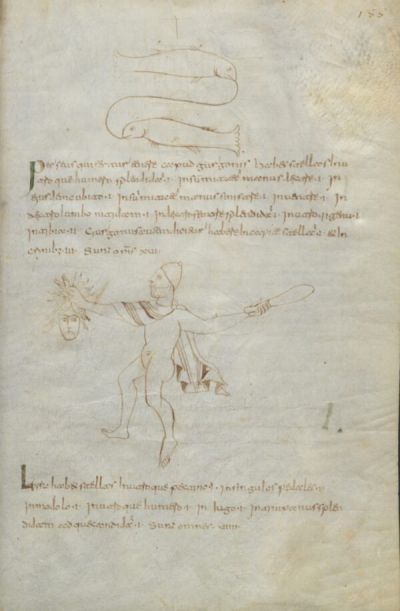
Cod. 3 p. 185
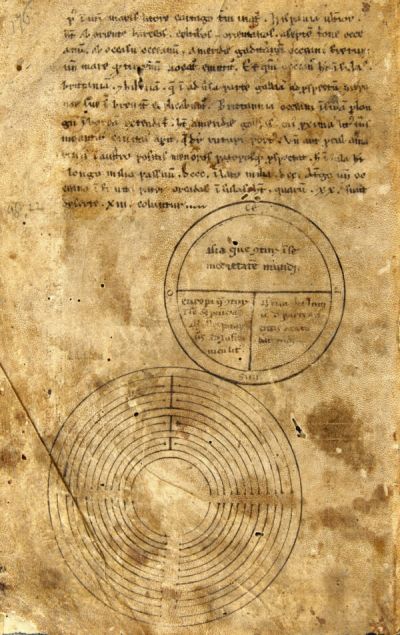
The monks’ attention was not focused solely on the sky. The study of the earth and geography was also important, as demonstrated by manuscript Cod. 391, which contains the ‘Collectanea rerum memorabilium’ by Solinus, a Roman author of the 3rd century AD. It is a collection of descriptions of places, lands and peoples of the known world, enriched with curious details about plants, minerals, ethnic groups and animals, including monstrous ones. The codex was created during the years of Abbot Desiderius and was also used later on. At the beginning of the 12th century, a drawing of a globe was added: the Earth, surrounded by the sea, is divided into three parts, with Asia occupying most of it and Europe and Africa the other two.