Striscione blu con i loghi di Unione Europea, Ministero Università e Ricerca, PNRR, UniCassino, Sapienza e testo correlato.

The Events

After the Allied landing in Sicily between 9 and 10 July, concern grew about the fate of vulnerable cultural heritage and safe places were identified to protect it.

The medal collection of the Paolo Orsi Archaeological Museum in Syracuse, the collection of the Keats-Shelley Museum in Rome, the private archive of the House of Savoy and the Treasure of San Gennaro in Naples were transferred to the Abbey of Montecassino. Sculptures and artefacts from Herculaneum and Pompeii from the National Archaeological Museum and important paintings from the Capodimonte National Gallery and the 1941 Mostra d’Oltremare also arrived.

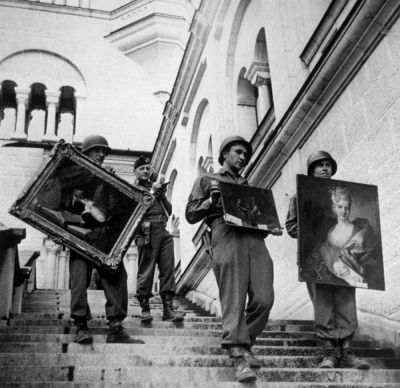
Soldati che trasportano dipinti giù per le scale dell’abbazia durante le operazioni di recupero e messa in sicurezza delle opere.

Soldati trasportano quadri


Montecassino also houses a valuable collection of books and documents, comprising around 70,000 volumes, including precious manuscripts, illuminated codices and incunabula, which became state property after the laws suppressing religious orders in the post-unification period after 1861, along with numerous works of art belonging to the abbey.

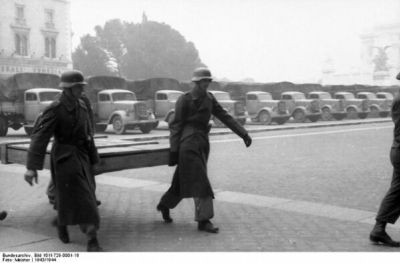
On 14 October 1943, two German officers from the ‘Hermann Göring’ division, Lieutenant Colonel Schlegel and Medical Captain Becker, presented themselves to Abbot Diamare with orders to transfer the cultural heritage to Rome. The convoys, in two blocks, left between 17 October and 3 November 1943. The first transported the monastery’s private property, the second that of the state (including about 180 crates from Neapolitan museums and archival documents). They were taken to the collection centre for works from central and southern Italy in Spoleto and, on 10 December 1943, to Rome.

 

Soldati che trasportano un quadro imballato lungo una strada, con una fila di camion militari parcheggiati sullo sfondo.

Soldati trasportano quadro imballato

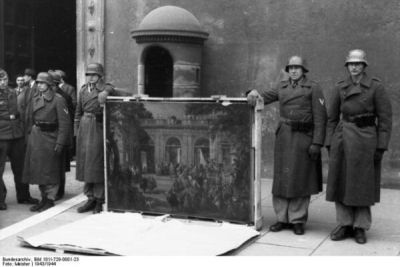
On 4 January 1944, the Germans organised a handover of 180 crates from the museums of Naples in Piazza Venezia, but twenty were missing.


Soldati schierati a Piazza Venezia mentre mostrano un grande dipinto durante la cerimonia di restituzione delle opere d’arte.

Soldati mostrano quadro a Piazza Venezia durante la cerimonia di restituzione delle opere

Among the missing works was Titian’s Danae, which reappeared in Germany as a birthday gift to Göring. After the war, Rodolfo Siviero and other state officials worked to bring the looted heritage back to Italy. Danae and other works were recovered in Austria and returned to Italy on 7 August 1947.