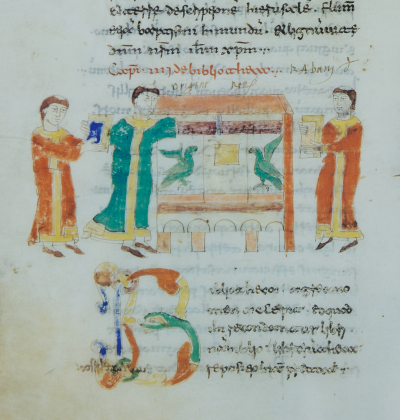
This environment began to appear regularly in monasteries between the 7th and 8th centuries. During this period, demand for copies of sacred texts and other manuscripts began to grow.
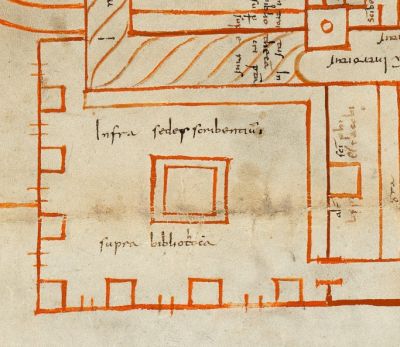
In the aforementioned plan of St. Gallen, for example, below the library, we find a room called ‘sedes scribentium’ (‘the copyists’ room’), where monks worked assiduously on copying manuscripts. The French monk Héric d’Auxerre of Ferrières Abbey, in the 9th century, reports that Abbot Lupus had created a ‘crypt for scribes’, i.e. dedicated to writing.
Despite the differences with modern libraries, medieval Benedictine monasteries already felt the need for a dedicated space to copy and preserve books so that they could be handed down through the ages.