Striscione blu con i loghi di Unione Europea, Ministero Università e Ricerca, PNRR, UniCassino, Sapienza e testo correlato.

The miniature of Desiderio

During Desiderius’s rule, the Abbey of Montecassino experienced a period of intense artistic fervour. To decorate the new basilica, Desiderius sought out artists and works of art from both the West and the East, encouraging illuminators to renew the Cassinese decorative style, which had a long tradition. They rediscovered masterpieces of book art that had been kept in the monastery for decades, such as the https://digi.vatlib.it/view/MSS_Ott.lat.74, donated to Abbot Theobald in 1022. The book features splendid letters decorated with gilded plant motifs, typical of Ottonian miniatures.

The Desiderian illuminators drew inspiration for their figurative style from Byzantine art. The latter was known thanks to the mosaicists, icons and goldsmiths that Desiderius brought to Montecassino.

The year 1066, when reconstruction work began on the abbey church, also marked a turning point for the scriptorium. Several precious codices were produced, such as Cod. 339 [https://omnes.dbseret.com/montecassino/view.jsp?cid=IT-FR0084_0339], written, like the others, in Beneventan script. Beneventan was the national script of southern Italy in the Middle Ages, which during this period took on particular characteristics typical of Monte Cassino.

The most splendid period was between 1071 and 1080. Manuscripts were produced that were associated, in terms of use and function, with the new spaces and furnishings that Desiderius had created for liturgical celebrations.

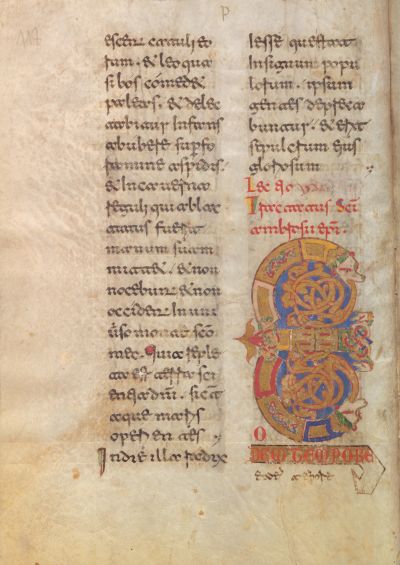
Pagina del Codice 98 con testo in scrittura medievale disposto su due colonne e una grande iniziale decorata in oro, rosso e blu nella parte inferiore destra.

Cod. 98, p. 118


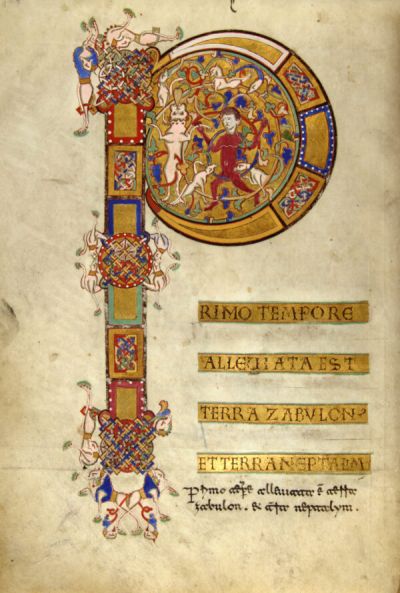
New types of letters appeared, often of monumental size, characterised by backgrounds simulating porphyry or lapis lazuli, with golden or polychrome racemes in which men, animals or monstrous creatures were trapped, as in the Norman books that circulated in large numbers throughout southern Italy.

Manuscripts such as the Homilies Cod. 98 [https://omnes.dbseret.com/montecassino/view.jsp?cid=IT-FR0084_0098] and Cod. 99, and the Lectionary Vat. Lat. 1202 [https://digi.vatlib.it/view/MSS_Vat.lat.1202], created for the abbey church, represent extraordinary examples of the decorative and illustrative style of the Desiderian period. They show that the scriptorium employed a team of expert draughtsmen, illuminators, decorators and rubricators, each assigned with a specific task.
Pagina del Codice 99 con una grande iniziale miniata riccamente decorata in oro e colori vivaci, popolata da figure e motivi intrecciati, accompagnata da testo disposto su più righe.

Cod. 99, p. 24

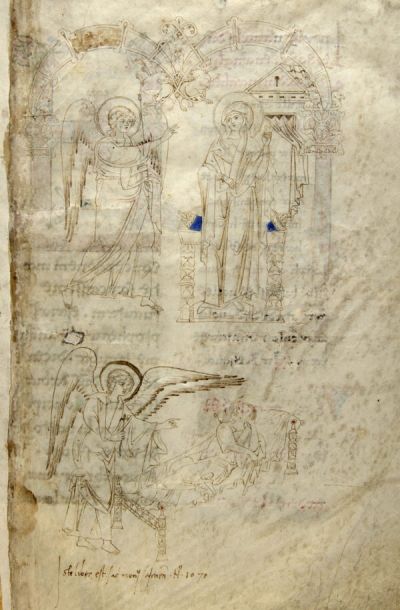
Pagina del Codice 99 con scene miniate a tratto sottile: in alto l’Annunciazione con l’angelo e Maria sotto un’architettura arcuata, e in basso un angelo che appare in sogno a un uomo disteso.

Cod. 99, p. 5

The design of such books entailed great attention to detail: the preparation of the parchment and the page, the writing in columns punctuated by letters and cartouches highlighted in gold, the elegant title pages, where the red of the rubrics stands out against the white background, the sumptuous opening pages, either single or arranged one opposite the other, the decorated and simple initials, which in perfect hierarchical order in terms of size indicate the textual partitions.

Also noteworthy are the drawings, such as those of the Great Feasts that appear in the Homilies Cod. 98 [https://omnes.dbseret.com/montecassino/view.jsp?cid=IT-FR0084_0098] and 99 and the lively illuminated scenes depicting the lives of St. Benedict and St. Maurus in Vat. Lat. 1202 [https://digi.vatlib.it/view/MSS_Vat.lat.1202], or even the original images accompanying the Exultet chant [internal link to the website, to the virtual section with the pulpit].